
Contents
Why Singapore Buildings Are Vulnerable
Singapore's average relative humidity of 80 percent, combined with temperatures that rarely dip below 24 degrees Celsius even at night, creates a thermally stable environment that sustains termite colonies year-round. Unlike temperate regions where cold winters slow colony expansion, tropical termite populations grow continuously, with mature colonies reaching several million individuals within three to five years.
The building stock itself amplifies this vulnerability. Approximately 80 percent of Singapore's resident population lives in HDB (Housing and Development Board) flats, many of which underwent renovation in the 1990s and 2000s using wood-heavy interior fitouts — built-in wardrobes, parquet flooring, door frames, and kitchen cabinetry. These cellulose-rich elements sit within concrete structures that, while not themselves vulnerable to termite consumption, contain expansion joints, pipe penetrations, and cable conduits that provide concealed pathways from soil to interior spaces.
Termite Species in the Region
Three categories of termite are documented in Singapore's urban environment:
Subterranean Termites
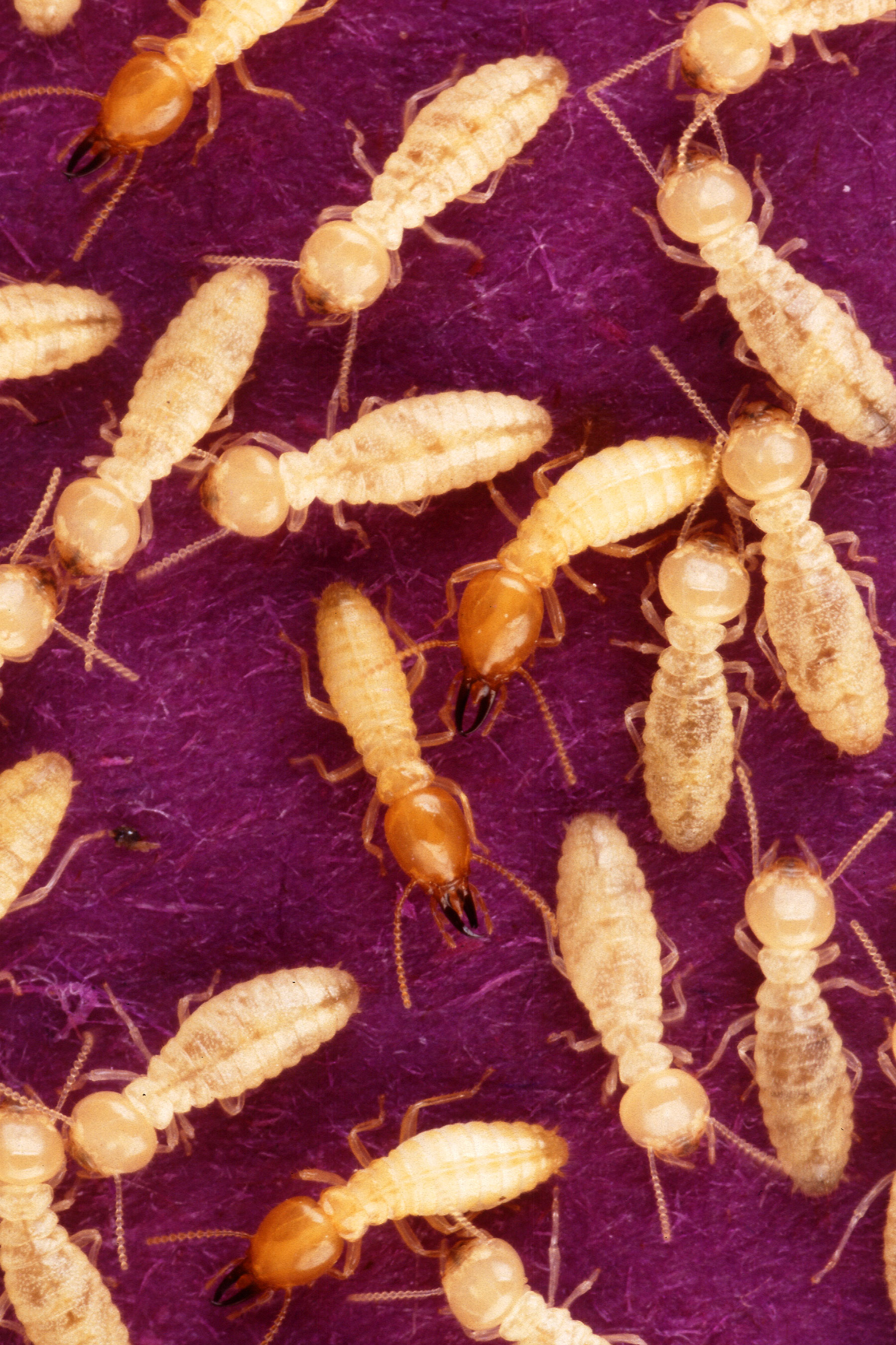
The Coptotermes genus — particularly Coptotermes gestroi and Coptotermes formosanus — accounts for the majority of structural damage cases reported to pest control operators. These species nest underground or within wall voids and construct mud tubes to reach above-ground food sources. A single colony of Coptotermes formosanus can contain over one million individuals and consume approximately 400 grams of wood per day.
Drywood Termites
Cryptotermes species infest timber directly without soil contact. They are commonly introduced via infested furniture, particularly second-hand or imported wooden items. Colonies are smaller (typically 1,000 to 3,000 individuals) but can establish multiple discrete infestations within a single property. Their frass — small, hexagonal pellets ejected from kick holes — is often the first visible indicator.
Dampwood Termites
Less common in well-maintained urban buildings, dampwood termites target timber with elevated moisture content. They are occasionally found in properties with chronic water leakage or inadequate bathroom waterproofing.
Early Warning Signs
Termite activity is frequently undetected until structural damage has progressed beyond surface level. The following indicators warrant immediate professional inspection:
- Mud tubes — pencil-width trails of packed earth running along walls, foundations, or ceiling joints, constructed by subterranean species to maintain humidity during transit
- Hollow-sounding timber — tapping on door frames, skirting boards, or built-in furniture produces a distinctly hollow sound where internal consumption has occurred
- Discarded wings — translucent, paired wings shed by reproductive termites (alates) after swarming flights, typically found near windows or light sources
- Blistered or bubbling paint — surface distortion on painted woodwork caused by termites feeding just beneath the paint layer
- Frass deposits — small mounds of wood-coloured granules below kick holes in timber, diagnostic of drywood species
- Sagging doors or windows — structural distortion from internal consumption of frame timber
Treatment Methods and Costs
Singapore's pest control industry, regulated by NEA under the Control of Vectors and Pesticides Act, offers several treatment approaches. All commercial termite treatment must be carried out by NEA-licensed operators.
Baiting Systems
In-ground and above-ground bait stations contain slow-acting insect growth regulators (typically hexaflumuron or noviflumuron) carried back to the colony by foraging workers. Colony elimination typically occurs within 8 to 16 weeks. Cost: S$1,500 to S$4,000 depending on property size and station count. Monitoring is ongoing, usually on a quarterly basis.
Soil Chemical Barriers
Liquid termiticide (commonly fipronil or imidacloprid) is injected into soil around the building perimeter and beneath floor slabs through drilled access points. This creates a treated zone that kills termites on contact. Effective lifespan: 5 to 10 years. Cost: S$1,200 to S$3,500 for HDB flats; higher for landed properties.
Localised Liquid Treatments
For confirmed active infestations in specific locations, operators may apply non-repellent liquid termiticides (such as Termidor SC) directly to affected areas. Cost: S$300 to S$800 per treatment zone.
Fumigation
Reserved for severe drywood termite infestations, whole-structure fumigation uses sulfuryl fluoride gas. The property must be vacated for 48 to 72 hours. Effectiveness against drywood species approaches 100 percent, but the method does not provide residual protection. Cost: S$3,000 to S$8,000.

Long-Term Prevention Strategies
Effective termite prevention in tropical buildings combines physical, chemical, and behavioural measures:
Moisture Control
- Repair all plumbing leaks within 48 hours of detection
- Ensure bathroom and kitchen waterproofing membranes are intact, particularly in units older than 15 years
- Use dehumidifiers to maintain indoor humidity below 65 percent during extended wet periods
- Ensure air-conditioning condensate drains freely and does not pool near building foundations
Physical Barriers
- Stainless steel mesh (particle size below 1.0mm) installed at construction joints and pipe penetrations during renovation
- Crushed granite aggregate (particle size 1.7–2.4mm) used as physical fill beneath floor slabs
- Maintain a minimum 150mm clearance between soil level and any untreated timber
Monitoring
- Quarterly visual inspections of all timber elements, focusing on built-in cabinets, door frames, and areas adjacent to bathrooms
- Annual professional inspections by NEA-certified technicians, particularly for ground-floor and second-floor units
- Installation of timber monitoring stations at building perimeters for early detection
HDB-Specific Considerations
Ground-floor HDB units face elevated risk due to direct soil proximity. Termites commonly enter through expansion joints at the slab-to-wall junction, through cable conduits, and via planter boxes built into older block designs. Shared rubbish chutes and bin centres — which contain cellulose-rich waste — can serve as initial attraction points for foraging colonies.
HDB residents who suspect termite activity should file a report through the OneService app or contact their town council directly. Town councils are responsible for common area pest management and may coordinate joint inspections with NEA-licensed operators. Individual unit treatment remains the responsibility of the resident or owner.
During renovation, specifying termite-resistant materials (such as cement-bonded particleboard for built-in furniture) and requesting pre-treatment soil barriers from the renovation contractor can significantly reduce long-term risk.